Aviation Switching Module – NSN 4920-01-250-2696 (AS-IS / Untested): Aircraft Switching Equipment for Parts or Evaluation
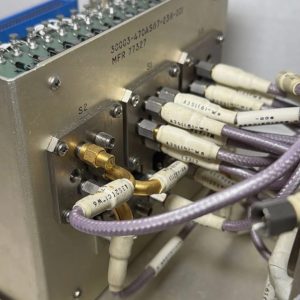
The Aviation Switching Module – NSN 4920-01-250-2696 (AS-IS / Untested) provides aviation maintenance organizations, military-surplus buyers, aerospace technicians, equipment restorers, read more and collectors with access to a catalog-identified switching component whose operational status has not been confirmed.
An Aircraft Switching Module and Aerospace Switching Module should be treated as specialized equipment rather than universal components that can be connected to any aircraft electrical system.
Whether buyers search for an Aircraft Electrical Switching Module, Aviation Electrical Control Module, Aircraft Power Switching Module, Aerospace Electrical Control Unit, or Aircraft Signal Switching Module, technical identification should guide the purchase.
Accurate use of Aviation Control Module, Aircraft Electronic Switching System, Aerospace Switching Unit, and Aircraft Electrical Module terminology improves SEO without creating unsupported functional claims.
Understanding NSN 4920-01-250-2696
Accurate NSN verification helps reduce purchasing errors and prevents an unrelated module from being represented as compatible equipment.
Military or aviation-surplus components may carry replacement numbers, superseded numbers, modification markings, or contract identifiers that assist research.
AS-IS Aerospace Equipment Considerations
AS-IS and untested means the module is offered without confirmation that it powers on, switches circuits, communicates with associated equipment, meets specifications, or performs its original function.
Professional evaluation protects the module, technician, test equipment, and any associated aerospace system.
Evaluating Aircraft Switching Functions
Application accuracy protects buyers from assuming that a broadly named Aircraft Switching Module will fit their project.
Missing knobs, guards, labels, connectors, covers, or fasteners may reduce completeness.
Maintaining a Switching Module Assembly
Age, handling, impact, humidity, temperature changes, contamination, and long-term storage can affect both mechanical and electrical condition.
Connector damage can prevent proper mating or create electrical shorts even when the module enclosure remains intact.
Aircraft Electrical Hardware Review
Discoloration near connectors or switches may indicate electrical heat, chemical exposure, or ordinary aging and should be investigated.
The module should not be modified simply to produce a temporary power-on result.
Aircraft Electrical Control Applications
Similar-looking modules may use completely different pin assignments and operating voltages.
Control labels and switch legends can provide useful clues, but they should not be used as the only source of technical identification.
Aircraft Power Switching Module Considerations
A switch that moves normally may still contain burned, corroded, welded, or high-resistance electrical contacts.
Power-input and output terminals should be checked for looseness, heat discoloration, corrosion, damaged insulation, and unsuitable previous repair.
Choosing an Aerospace Electrical Control Unit
Visual inspection, continuity checks, insulation review, component identification, and controlled testing may form part of a professional evaluation.
Every repair should be photographed and recorded if the module is restored.
Aircraft Signal Switching Module Uses
An Aircraft Signal Switching Module may route low-level, control, communication, measurement, or test signals between compatible equipment channels.
The module should not be modified with unshielded wiring or improvised connectors solely for convenience.
Control Module Compatibility Review
An Aviation Control Module should be treated as one component within a larger system rather than a standalone universal controller.
Compatibility should be verified through NSN, part number, manufacturer, connector layout, revision level, modification status, and equipment application.
Aircraft Test and Support Equipment
Its value depends on identity, completeness, cosmetic condition, connector integrity, internal status, rarity, and availability of documentation.
Training use should avoid destructive modifications when the component has collectible or restoration value.
Choosing an Aerospace Power Distribution Module
A module should not be loaded electrically until contact condition, insulation, wiring, and circuit configuration are understood.
Mounting points should be inspected because secure installation can affect grounding, cooling, vibration resistance, and connector alignment.
Control Unit Connector and Switch Review
The unit should be photographed before and after any preservation work.
Unknown circuits should not receive voltage simply because a connector pin appears to be a power input.
Choosing an Aviation Power Control Module
Responsible product information protects buyers seeking an Aviation Power Control Module.
Warning labels should remain visible and legible.
Understanding an Aircraft Electronic Switching System
System diagrams can help identify required inputs, outputs, grounds, control logic, and companion components.
Professional analysis supports responsible Aircraft Electronic Switching System maintenance.
Long-Term Storage of Aircraft Electronics
Proper storage helps preserve the Aerospace Switching Unit for testing, restoration, or collection.
The module should be enclosed in a moisture-resistant protective layer and placed inside a strong outer carton or suitable shipping case.
Aircraft Electrical Module Buying Considerations
An Aircraft Electrical Module should be purchased according to exact identity, intended use, condition, completeness, technical support, testing requirements, and available documentation.
Remote buyers should request current photographs of the actual unit instead of relying on catalog images or pictures of similar equipment.
Inspecting the Aviation Switching Module Before Purchase
A detailed review reduces misunderstanding and supports realistic purchasing decisions.
- Confirm that the identification plate shows NSN 4920-01-250-2696 and record every manufacturer number, serial number, contract marking, revision, and modification label.
- Check for burned odors, melted material, arcing marks, water entry, chemical residue, and internal loose components where visible.
- Require packaging that protects connectors, switches, labels, enclosure corners, mounting brackets, controls, and loose accessories from movement and impact.
Evaluating an Untested Electrical Module
The module should not be powered until input requirements, polarity, grounding, circuit protection, and expected loads are understood.
Powered testing should proceed gradually while monitoring current, temperature, smell, noise, indicators, and unexpected behavior.
Repairing Legacy Aviation Control Hardware
Professional restoration can improve the usability and value of the Aerospace Switching Module.
The final product status should describe only the functions that were evaluated successfully.
Buying NSN 4920-01-250-2696
The Aviation Switching Module – NSN 4920-01-250-2696 (AS-IS / Untested) may suit aviation workshops, military-surplus collectors, aerospace technicians, educational programs, equipment restorers, and specialist parts buyers.
The strongest buying decision begins with confirming the NSN, manufacturer, part number, serial number, configuration, connector layout, condition, storage history, modification status, included equipment, and intended use.
Whether the product is described as an Aircraft Switching Unit, Aerospace Power Distribution Module, Aircraft Electrical Control Unit, or Aviation Power Control Module, AS-IS limitations should remain clear.
With prompt attention to switches, connectors, wiring, enclosure condition, corrosion, labels, and internal components, the module can preserve its technical and commercial potential.